icigp_contact@163.com +86-18000547208

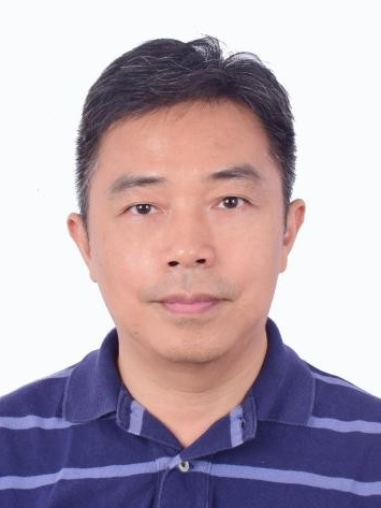
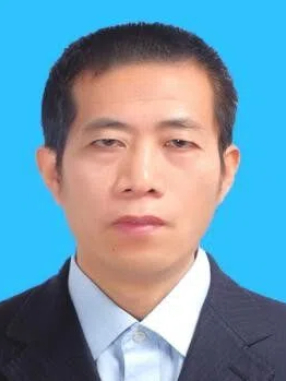
Prof. Xiang Xu
University of Electronic Science and Technology of China, Zhongshan Institute, China
Biography:
XIANG XU (S’14–M’18) received the B.S. and M.S. degrees
in Theoretical and Applied Mechanics from Sun Yat-sen
University, Guangzhou, China, in 1999, 2002,
respectively, and the Ph.D. degree in Cartography and
Geographical Information Systems from Sun Yat-sen
University, Guangzhou, China, in 2018.
From 2002 to 2004, he was a Software Engineer in the
SUNTEK Technology Co., LTD. In 2004, he joined the
University of Electronic Science and Technology of
China, Zhongshan Institute. He is currently a full
Professor with the school of computer science,
University of Electronic Science and Technology of
China, Zhongshan Institute. He has authored and
coauthored a total of 42 journal citation report papers,
and 3 book chapters. His current research interests
include remotely sensed hyperspectral image analysis,
biometric technology based on finger vein image, signal
processing, pattern recognition,
supervised/semi-supervised learning and active learning.
Dr. Xu is a Reviewer of more than 10 international
academic journals, including IEEE Transactions on
Geoscience and Remote Sensing, IEEE Journal of Selected
Topics in Applied Earth Observations and Remote Sensing,
IEEE Geoscience and remote sensing Letters, ISPRS
Journal of Photogrammetry and Remote Sensing,
Proceedings of the IEEE, Communications in
Statistics-Simulation and Computation, Infrared Physics
and Technology, and so on.

Prof. Wen Xiao
China University of Geosciences, Wuhan, China
Biography: Wen Xiao is currently a Professor at China University of Geosciences, Wuhan, China. Prior to that, he joined Newcastle University, UK, as a Lecturer in Laser Scanning and Photogrammetric Computer Vision in the Geospatial Engineering group of School of Engineering in 2016. His research interests lie in the integration of artificial intelligence, computer vision and robotics with photogrammetry, laser scanning and remote sensing, applied to digital twins, intelligent transportation, and smart cities, focusing on building and transport systems monitoring, change detection and dynamics monitoring from various sensing platforms, e.g. in situ and mobile (incl. UAVs) laser scanning and imaging systems . He is PI of an intelligent roadside sensing project and a 3D dynamics sensing project funded by NSFC, Co-I of three projects funded by NERC UK and two key R&D projects funded by MOST China.

Prof. Chao Wang
Aerospace Information Research Institute, Chinese Academy of Sciences, China
Biography: Chao Wang received
his Ph.D. degree in earth science from Nanjing
University in 1989. He is professor of Aerospace
Information Technology University, and the International
Research Center of Big Data for Sustainable Development
Goals (CBAS). He was the Deputy Director and professor
of CAS-IRSA from 1997 to 2004, and the Deputy Director
and professor of China Remote Sensing Satellite Ground
Station (RSGS), CAS from 2004 to 2007. He served as the
Chairman of IEEE GRSS Beijing Chapter from 2003 to 2012.
He has been PIs and Co-Is of several national and
international SAR projects. Currently he is in charge of
the Key Science Instrument Development Project funded by
National Natural Science Foundation of China (42327801).
His research interests include SAR AI, Drone SAR
interferometry and SAR for sustainable development.
Speech Title: SARCLIP: A Multimodal Foundation Framework
for SAR Imagery via Contrastive Language-image
Pre-training

Prof. Haixia Bi
Xi’an Jiaotong University, China
Biography:
Haixia Bi, Professor, Ph.D. Supervisor with
the School of Information and Communications
Engineering, Xi’an Jiaotong University, Xi’an, China.
She received the Ph.D. degree in computer science and
technology from Xi’an Jiaotong University, Xi’an, China,
in 2018. She was a Post-Doctoral Research Fellow with
the University of Derby, Derby, U.K., from 2018 to 2019,
and the University of Bristol, Bristol, U.K., from 2019
to 2021.
Her research interests include remote sensing image
classification and multi-modality image fusion. She has
published more than 40 papers in top journals and
conferences in the field of remote sensing such as IEEE
TIP, IEEE TGRS, IGARSS etc, and 2 papers have been
selected as ESI highly cited papers.
She has been active reviewers for many authoritative
academic journals, such as IEEE TPAMI, IEEE TIP, IEEE
TGRS, information fusion etc. She was the recipient of
the Best Reviewer Award of the IEEE Geoscience and
Remote Sensing Letters in 2019 and 2021. She serves as a
guest editor of Remote Sensing special issue. She served
as session chairs in IEEE NTCI 2023 and IGARSS 2024.

Assoc. Prof. Tao Sun
Shenzhen Institutes of Advanced Technology, Chinese Academy of Sciences, China
Biography:
Tao SUN is currently an Associate Professor at the Paul
C. Lauterbur Research Center for Biomedical Imaging,
Shenzhen Institutes of Advanced Technology, Chinese
Academy of Sciences. He is a Category B awardee of the
Chinese Academy of Sciences Talent Program and a
Category C Overseas High-Level Talent of Shenzhen. His
honors include the SNMMI “Ones to Watch” Young
Investigator Award, nomination for the EANM Sanjiv Sam
Gambhir Young Investigator Award, the First Prize of
Henan Provincial Science and Technology Progress Award,
and the Best Presentation Award at the National PET/MR
Conference.
His research focuses on PET/CT and PET/MR imaging
methodologies, with particular emphasis on quantitative
optimization of total-body PET and multi-organ
functional modeling. He has served as principal
investigator or key contributor on six competitive
research projects funded by national, provincial, and
municipal agencies, including the National Key R&D
Program of China and the Guangdong Regional Joint Fund.
In quantitative PET analysis and computer-aided
diagnosis, he has published 30 SCI-indexed papers as
first or corresponding author in leading journals such
as IEEE Transactions on Medical Imaging, European
Journal of Nuclear Medicine and Molecular Imaging, and
NeuroImage. He currently serves as Associate Editor of
Physical and Engineering Sciences in Medicine.

Assoc. Prof. Jing Wen
Chongqing University, China
Biography:
Dr. Jing Wen specializes in optoelectronic detection
technology and instrument development. She earned her
Ph.D. in Instrument Science and Technology (2007) and
B.E. in Electronic Engineering (2001), both from
Chongqing University. She conducted postdoctoral
research in semiconductor detection (2007-2011) and has
been a faculty member since 2007, including a visiting
scholarship at the University of Illinois at Chicago in
2017.
As principal investigator, she has secured several
competitive grants, including the National Natural
Science Foundation Youth Project and the Chongqing
Natural Science Foundation General Project. She has also
contributed as a key member to multiple national key
programs (e.g., NSFC Key Program, National 863 Program).
Her achievements include the Chongqing Science and
Technology Progress Award (Second Class) and over 20
first-authored publications.

Assoc. Prof. Kunqian Li
Ocean University of China, China
Biography: Dr. Li Kunqian is an associate professor and doctoral supervisor at the College of Engineering, Ocean University of China, and a recipient of the Distinguished Young Scholar Fund from the Natural Science Foundation of Shandong Province. He earned his Ph.D. in Control Science and Engineering from Huazhong University of Science and Technology in 2018. His current research focuses on visual perception applications in underwater environments, underwater operational robotics, and multimodal perception in maritime and port contexts. He has led three projects funded by the National Natural Science Foundation of China. Additionally, he has participated as the second-ranked contributor in a key national research and development program. Over the past five years, he has authored or co-authored more than ten SCI-indexed journal articles as first or corresponding author, published in leading journals such as IEEE TIP, TCSVT, TGRS, PR, and TIM. Since 2022, his published works have accumulated over 1,000 citations according to Google Scholar.

Assoc. Prof. Liping Yang
Chongqing University, China
Biography: LIPING YANG received the B.S. degree in Measurement and Control Technology and Instruments from Chongqing University, Chongqing, China, in 2003, and the Ph.D. degree in Instrument Science and Technology from Chongqing University, Chongqing, China, in 2008. In 2009, he joined the College of Optoelectronic Engineering, Chongqing University. From 2018 to 2019, he was a visiting scholar in the University of Rhode Island, Rhode Island, USA. He is currently an Associate Professor with the College of Optoelectronic Engineering, Chongqing University. He has authored and coauthored more than 50 journal papers. His current research interests include industrial defect detection, hyperspectral image analysis, audio signal processing, pattern classification and machine learning.

Prof. Zengxi Huang
Xihua University, China
Biography:
Zengxi Huang earned his Ph.D. in Computer Science and
Technology from Sichuan University, China, in 2014. He
is currently a Professor at the School of Computer and
Software Engineering, Xihua University, where he served
as Associate Dean of the Software Engineering Department
from 2018 to 2022. Since 2016, he has also been the
Technical Director of the Audio-Visual Forensic
Examination Group at the Sichuan Xihua Jiaotong Forensic
Center.
From 2017 to 2018, he was an Academic Visitor at the
Centre for Vision, Speech and Signal Processing (CVSSP),
University of Surrey, U.K., collaborating with the
distinguished Professor Josef Kittler. He is working
with Professor Cairong Zhao at Tongji University since
2024. His research primarily lies in the field of
computer vision and image processing, with specific
interests in pedestrian detection, person
re-identification, human action recognition, and
multimodal biometrics.
Dr. Huang has led or participated in more than 10
research projects and has published over 20 academic
papers. His work has been recognized with several
awards, including the Best Paper Award for Commercial
Applications at the AMDO 2018 conference and the
Outstanding Forensic Examination Report award at the 3rd
"Song Ci Cup" competition organized by the Ministry of
Justice of China.

Assoc. Prof. Zhuhong Shao
Capital Normal University, China
Biography: Zhuhong Shao, an associate professor and master's supervisor at the College of Information Engineering, Capital Normal University, Beijing, China. He has been selected as a "talent support program" YanJing Scholar (2024) and a "young YanJing Scholar cultivation" program (2017-2019) of Capital Normal University. He has been presided over several projects including the National Natural Science Foundation of China, the Beijing Municipal Education Commission's Research Plan, and the Beijing Municipal Organization Department's Excellent Talent Project. He received the Ph.D. in Computer Science and Technology from Southeast University in 2015, Nanjing, China. He served as a visiting scholar at the School of Artificial Intelligence of Beijing Normal University from 2023 to 2024. His research interest focuses on computer vision and intelligent speech analysis, multimodal emotion recognition, and medical artificial intelligence. He has published over 100 papers in journals and conferences such as IEEE TAFFC, IEEE JBHI, and PR, and obtained 31 national invention patents. He has received the third prize of the National Science and Technology Progress Award of the China Business Federation (2023, 4/12), the first prize of the Henan Provincial Education Department's Scientific and Technological Achievement Award (2024, 5/15), the second prize (2023, 2/15; 2022, 3/13), and the first prize of the Capital Normal University's Teaching Achievement Award (2021, 1/5) and the second prize (2024, 2/8). Currently, he is a senior member of CSIG/CCF.

Asst. Prof. Raheleh Kafieh
Durham University, UK
Biography:
Raheleh Kafieh is an Assistant Professor of
Bioengineering at Durham University, UK, and an EPSRC
Women in Engineering Ambassador. Her research focuses on
artificial intelligence–driven image and graphics
processing for biomedical applications, with particular
emphasis on ocular imaging, neuroimaging, and multimodal
medical data analysis. She works closely with clinicians
and the NHS to translate advanced image analysis methods
into real-world healthcare solutions, including early
disease detection, home-based imaging for ageing
populations, and AI-enabled referral pathways from
community settings to hospitals.
She has over 12 years of experience in medical image and
signal processing using machine learning and deep
learning techniques. She has authored more than 150
peer-reviewed publications, with over 4,000 citations,
and her work has appeared in leading journals across
medical imaging, image processing, and artificial
intelligence.
Dr Kafieh has successfully secured multiple competitive
grants as Principal Investigator and Co-Investigator
from national and international funders, including
EPSRC, UKRI–MRC, NIHR-related schemes, and charitable
foundations. She has previously held research positions
at Charité–Universitätsmedizin Berlin, Newcastle
University, and Sabanci University, and has extensive
experience supervising and examining PhD and MSc
students both in the UK and internationally.
She serves as an editor and reviewer for several leading
journals in image processing and medical AI. Her current
research aims to advance robust, interpretable, and
equitable AI methods that bridge image and graphics
processing with clinically meaningful decision-support
systems.